ARE YOU BUYING IN BULGARIA? Here's what you NEED to know: Real-life stories + 24 hidden risks
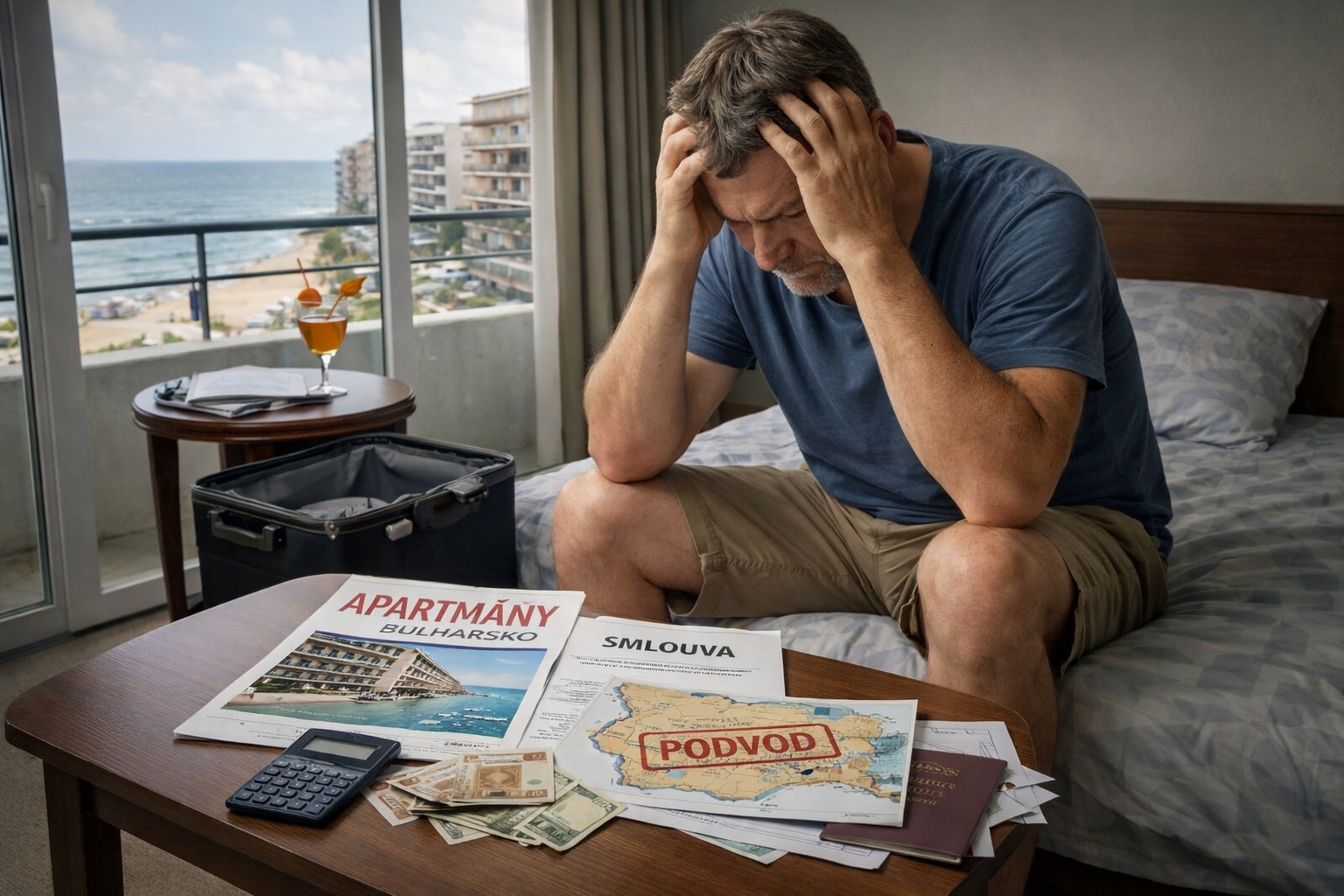
When a Dream Turns into a Nightmare
Imagine this: you arrive in Bulgaria full of excitement. The sun is shining, the sea is turquoise, and the air smells of salt and a light breeze. Your guide takes you to a beautiful apartment overlooking the beach. The price? Unbelievable. Too good to be true—but at that moment, it doesn’t seem that way. It looks like the opportunity of a lifetime.
And then that moment comes. “You have to decide today. Tomorrow it’ll be gone.”
A hand reaches into the bag. The money changes hands with a stranger. A smile, a handshake, a promise that “we’ll take care of everything next time.”
And then… silence.
This isn’t a made-up story. This is a story we’ve heard countless times—with different names, different places, and different amounts. And every time, it hits us just the same. Because behind every story like this is a person who believed. A person who was looking forward to it. A person whom no one warned in time: be careful.
---
What we’ve actually experienced over the years of our work
We’re not theorists. We’re not people who read an article online and decided to write about the risks. We’re a team that lives, works, and solves problems in Bulgaria every day—even those that no one could have imagined in advance.
Let’s share some specific stories. Not to scare anyone, but so you know what you’re getting into—and why having the right partner is absolutely crucial when buying real estate in Bulgaria.
---
💸 Story One: €8,000 handed over without a contract. The man disappeared.
The clients—a nice couple from Slovakia—fell in love with an apartment near Sunny Beach. The seller came across as professional, spoke fluently, had business cards, and the whole thing looked legitimate. He asked for a reservation deposit of €8,000 in cash. He claimed it was standard procedure. He said that otherwise, he’d sell the apartment to someone else.
No contract. No receipt. No stamp. Just a promise and “see you next time.”
That “next time” never came.
When they contacted us, they were desperate. They had absolutely nothing—no documents, no proof of payment, no contact information that could be verified. The Bulgarian police recorded the incident, but the case was practically unsolvable. The money was never returned.
This is not an exception. This is one of the most common scenarios we encounter.
The golden rule: A reservation deposit should never exceed €1,000–2,000. Never without a written contract. Never in cash.
---
📄 Story Two: A Contract That Wasn’t a Contract
Another client was more cautious. He thought to himself—all right, I’ll sign the contract and pay the deposit via bank transfer. It seemed like he’d done everything right.
He paid €2,000, received a document titled “reservation contract,” and waited for the next steps. They never came. The seller stopped communicating. In the meantime, the apartment had been sold to someone else.
When the client consulted a lawyer, he discovered the devastating truth: the document he had signed lacked all legal requirements. The identifying information of the contracting parties was missing, as was a precise description of the property and any penalty clauses. From a legal standpoint, it was a worthless piece of paper.
The money was irretrievably gone.
The golden rule: Every contract must be reviewed by an independent lawyer—not one recommended by the seller. Your lawyer, your protection.
---
⚠️ Story Three: A Fantastic Price with a Huge Catch
“You have to see this—a 65 m² apartment with a sea view for only €38,000!”
One of our clients came to us with this enticing offer, his eyes sparkling. The price really was unbelievable. And we, as is our custom, began to investigate.
What did we find out? The apartment was in a complex where the annual maintenance fee was 60 € per square meter. For a 65 m² apartment, that means 3,900 € a year—just for managing the complex. Every year. No exceptions. No room for negotiation.
In other words—over ten years, you’ll pay nearly €40,000 extra in fees. Suddenly, that “fantastic” price isn’t so fantastic anymore.
The client thanked us. And started looking elsewhere—with us.
Golden rule: Always verify the amount of the annual maintenance fee. The standard range is €500–1,500 per year. Anything significantly higher is a red flag.
---
🏦 Story Four: The “Great Loan” That Wasn’t So Great
The seller offered an apartment at a “great price” and also arranged financing. The loan sounded tempting—low interest, flexible payments, everything handled on the spot.
What didn’t the client know? That the loan terms were deliberately worded in a complicated way and concealed hidden fees and penalties. Moreover, the choice of the financing institution was tightly tied to the developer—no independent bank, no opportunity to compare options.
The pressure was immense: “This offer is only available today. Otherwise, the price will go up by 15%.”
Fortunately, the client walked away and called us. Together, we analyzed the terms and recommended an alternative—financing with transparent terms.
The golden rule: Don’t let yourself be pressured into any financial product. You always have the right to review the terms, compare them, and consult with an independent expert.
---
But be careful—not everything is a scam. Sometimes, life just happens.
There’s a second category of situations that aren’t the result of malicious intent, but simply the way life goes. And this is exactly where having the right partner proves crucial.
---
⚰️ The Deceased Seller: Arriving to Find an Empty House
A story happened to one of our acquaintances that sounds like a scene from an absurd drama—but it was completely real.
He flew to Bulgaria to sign the property transfer documents. Everything had been arranged. The hotel was booked, the notary was scheduled, and the documents were ready.
The seller didn’t show up.
After hours of waiting and making phone calls, a message arrived: the seller had died. A week before the transfer. No one had informed him of this.
He was standing in a foreign country, with nothing to show for it, having spent money on the trip and without any Plan B. The situation was devastating—and yet completely unnecessary.
Situations like this can be avoided. We do things differently. You don’t have to travel to Bulgaria just to sign—we’ll handle the entire purchase process remotely, including verifying all the necessary details and keeping you updated throughout.
This isn’t a criticism. It’s an example of why choosing the right partner matters.
---
📐 Incorrect information in the title deed: Square meters that weren’t there
Another case: a client was thrilled with an apartment; everything was just right, and he was ready to buy. We had the previous owner’s title deed reviewed.
And that’s where we found it: an incorrect square meterage for the common areas belonging to the apartment. The discrepancy wasn’t just cosmetic. It was an error that would directly affect the calculation of maintenance fees, taxes, and the legal relationship to the property.
Would you have caught this on your own? Probably not. A Czech or Slovak attorney without knowledge of the Bulgarian land registry system? Highly unlikely.
Our team caught it. The client was spared a potentially very costly problem.
---
What to Watch Out for When Buying Real Estate in Bulgaria
Here’s a handy table:
---
💰 Deposit and Payments
Do not pay a deposit higher than €4,000—the reservation deposit should be only symbolic (€1,000–2,000)
Never give anyone a deposit without a proper written contract and without conducting a prior background check
It’s best to pay by bank transfer. If you’re paying in cash, every payment must be properly documented
Pay the final amount through a notary or an escrow account, not directly to the seller
Be prepared to provide documentation of the source of the funds—a Bulgarian notary may require it
---
🔍 Property Inspection and Legal Due Diligence
Never proceed with the purchase without properly verifying the property in the Bulgarian Land Registry (Imoten Registar)
Always verify Act 16—this is the occupancy permit confirming that the building is legal and fit for habitation
Request the Notarial Act (title deed) and verify that the seller is the actual owner
Have the property checked to ensure it is not encumbered by a mortgage, lien, or foreclosure
For new construction, verify the validity of the building permit and its compliance with the actual condition of the property
Request a cadastral map—verify the boundaries, area, and status of the parcel
---
🏗️ Developer and Seller
Thoroughly vet the developer—their history, completed projects, reviews, and financial stability
Conduct the purchase exclusively through companies (s.r.o. / EOOD), not with individuals—this provides much simpler legal protection
Work only with verified real estate agencies, ideally those registered with the NSNI (National Association of Real Estate Agencies in Bulgaria)
---
📄 Contracts and Documentation
Insist on signing a preliminary contract before making any payment—it must be legally binding
Have the entire contract translated into Czech/Slovak by a certified translator and reviewed by an independent lawyer
Never rely solely on a lawyer recommended by the seller—hire your own independent lawyer
---
🧾 Costs and Taxes
Expect an additional 5–7% of the purchase price: transfer tax (~3%), notary fees, real estate agency commission, and interpreter fees
After the purchase, register with the local tax office within 2 months (property tax + municipal tax)
Check the amount of the annual maintenance fee (complex management)—it can range from 500–1,500 € per year and vary significantly
---
🚩 Red flags—stay away!
If someone seems suspicious—pressuring you to make a decision or offering “exceptional” terms—stop negotiating immediately
“You have to decide today/tomorrow” is a classic manipulation tactic—a reputable seller won’t pressure you
A price significantly below market value = a red flag. Always ask why and investigate thoroughly
If the seller refuses to provide documents or says “the documents are still being prepared”—walk away immediately
---
Save this table, print it out, or share it with friends—it’s worth having it on hand whenever you’re dealing with real estate in Bulgaria.
We could end here, with the table and cautionary tales. But we’d like to say one more thing.
We enjoy our work. But what motivates us even more is every client who calls us and says, “Thanks to you, everything turned out well.” Every person who moves into their dream apartment by the sea, knowing that the entire process was safe, transparent, and free of unpleasant surprises.
Bulgaria is a beautiful country with enormous potential. Real estate here is appreciating in value, the beaches are breathtaking, the climate is pleasant—and for many, it’s an investment that will pay off many times over. But like any investment, this one deserves respect, expertise, and the right guide.
We’re here for you. We’ll verify all the points described above on your behalf. We speak Czech and Slovak. We know the local market, local laws, and the local people. And most importantly—we see these risks every day, so we know exactly how to avoid them.
You don’t have to figure this out on your own. That’s exactly why we’re here.
---
Do you have questions about buying real estate in Bulgaria? Contact us—we’ll be happy to advise you, whether you’re just starting to think about it or already have a specific offer on the table.