How will the adoption of the euro in Bulgaria affect property prices? A complete guide for 2026
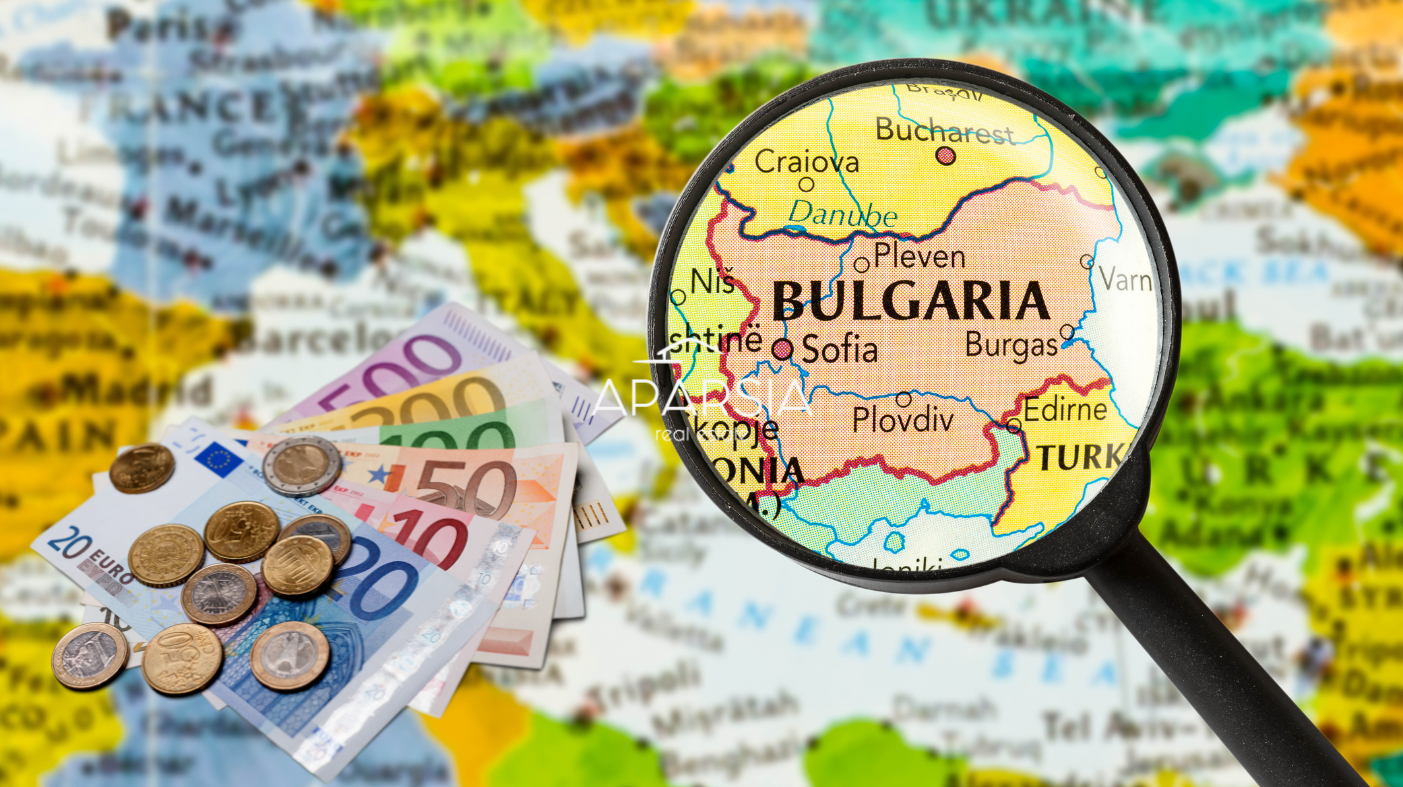
January 1, 2026 marked a historic milestone for Bulgaria—the country officially adopted the euro as its currency. For property owners, potential buyers, and investors alike, this raised a key question: How will this move transform the Bulgarian real estate market?
The reality is fascinating and extremely favorable for savvy investors. While the currency conversion itself won’t bring immediate price spikes, it creates a strong foundation for long-term growth in property values. Let’s dive deep into the mechanisms that are reshaping the Bulgarian real estate market right now.
Currency stability already existed—so what is actually changing?
Many believe that adopting the euro means a sudden change in the exchange rate. The opposite is true. The Bulgarian lev has been pegged to the euro via a currency board for more than two decades at a rate of 1.95583 leva per euro. Economic stability is therefore nothing new.
The real revolution is taking place in market psychology and the practical reality of transactions.
When foreign buyers see real estate prices directly in euros without having to mentally convert them, the last barrier of uncertainty disappears. When a Czech owner exchanges the Czech koruna for euros to purchase Bulgarian real estate, they need not worry about future currency fluctuations. When a German investor analyzes rental yields, they work with a currency they know perfectly well.
This psychological shift is far more powerful than most people can imagine. Confidence moves markets more than any economic indicators.
A Magnetic Effect on Foreign Capital
Pay close attention to what is happening in the markets of neighboring eurozone countries. Croatia adopted the euro in January 2023, and over the following 18 months, coastal regions saw a 34 percent increase in foreign transactions. Slovakia, Slovenia, and the Baltic states saw a similar pattern.
Bulgaria is now joining the same club of prestigious destinations. For buyers from Germany, Austria, the Czech Republic, or Slovakia, this means:
No more currency risk. No more tracking exchange rates, no more speculating whether the lev will strengthen or weaken. Your investment is protected by the world’s most stable currency.
Transparent value comparison. When you compare an apartment in Varna for €85,000 with a similar property in Split, Croatia, for €180,000, you immediately see where the value lies. Bulgaria suddenly looks not just cheap—it looks like the steal of the century.
Easier financing. Banks in the eurozone traditionally offer mortgages for properties in other eurozone countries on more favorable terms. Bulgarian real estate suddenly becomes more attractive for foreign mortgages with lower interest rates.
The Golden Black Sea Coast – the epicenter of transformation
If there is one region where the impact of adopting the euro will be felt most strongly, it is Bulgaria’s Black Sea coast. This area is already among the most dynamic real estate markets in Central and Eastern Europe.
The Varna Region – Gateway to the Black Sea
As Bulgaria’s third-largest city, Varna combines urban life with direct access to the sea. Since the adoption of the euro, we have observed several fascinating trends here:
A massive influx of Western European buyers seeking an alternative to the overcrowded and overpriced Mediterranean. German and Austrian families are discovering that for the price of a small apartment in Munich, they can own a spacious apartment with a sea view and still have money left over for renovations.
The rise of year-round living. Unlike purely seasonal destinations, Varna offers a full-fledged urban lifestyle. Foreign retirees and digital nomads, who previously hesitated due to currency concerns, now view the city as a stable long-term base.
Explosive growth in short-term rentals. With transactions in euros, calculating return on investment becomes transparent and predictable. An apartment purchased for 75,000 euros can generate an 8–12 percent annual return from tourist rentals—figures that have long since disappeared in Western Europe.
Balchik, Kavarna, and the Golf Coast—the Black Sea’s Hidden Gem
The northern coast between Varna and the Romanian border is undergoing perhaps the greatest transformation in all of Bulgaria. This area, known for its golf resorts, romantic coves, and a more tranquil character than the bustling tourist centers in the south, has long been an insider’s secret.
The euro is now revealing this secret to a wider audience.
When international golfers book a vacation at world-renowned courses like Thracian Cliffs or BlackSeaRama, a glance at local real estate prices in euros immediately shows them that for the cost of a week’s vacation in Spain, they could own an apartment here.
Topola and the surrounding Golf Coast represent a premium segment featuring villas and apartments in golf resorts. The adoption of the euro here acts as a catalyst for interest from wealthier buyers from the UK, Scandinavia, and the Benelux countries, who previously preferred Portugal or southern Spain.
Sveti Vlas, Sunny Beach, and Sozopol – tourist magnets
The southern part of the coast, with Sunny Beach at its epicenter, attracts millions of tourists annually. For investors, this means one crucial thing: guaranteed demand for rentals.
Sveti Vlas, the more sophisticated neighbor of the bustling Sunny Beach, offers an ideal combination of tranquility and accessibility. More luxurious apartments with marina access and mountain views appeal to a wealthier clientele. With transactions in euros, Sveti Vlas positions itself as the “Bulgarian Portofino”—exclusive yet still accessible.
Sozopol, a historic town on a rocky peninsula, attracts culturally oriented visitors. Ancient streets, art galleries, and an authentic atmosphere create a unique blend. Property values here are rising more steadily than in purely tourist areas because the town has a strong local identity.
Price Trends: Realistic Expectations for 2025–2027
Let’s be specific. Don’t expect prices to jump 50 percent overnight. Real estate markets react gradually but inexorably.
Analytical models based on historical data from new eurozone members show a typical pattern:
First year after accession (2026): A 20–30 percent increase in demand, with prices rising 5–8 percent in coastal areas. The interior remains stagnant for now.
Second year (2027): Growth accelerates to 8–12 percent annually in attractive locations. Interest expands to smaller cities with good infrastructure.
Third to fifth year (2028–2030): Stabilization at 5–7 percent annual growth. First signs of saturation appear in the most popular destinations.
Key locations such as Varna, Balchik, or Sveti Vlas are likely to exceed these averages and grow faster. The more luxurious segment with sea views may see cumulative growth of 30–40 percent over three years.
The Schengen Effect: A Double Catalyst
Bulgaria has joined the Schengen Area for both air and land borders. The combination of Schengen and the euro is an explosive mix for the real estate market.
Imagine this scenario: An Austrian family is planning a vacation. They can get in their car in Vienna, drive through Hungary and Romania to the Bulgarian coast without a single border check, paying in euros the entire way, with no currency exchange and no customs duties.
The psychological distance between Vienna and Varna has shrunk to the mere distance on a GPS navigation system.
For developers, this means an opportunity to build projects specifically targeting Central European clients with their quality standards. For owners of existing properties, this means expanding the pool of potential buyers by millions of households.
Inland Areas: Slower but Steady Growth
While the coast is in the spotlight, inland Bulgaria offers hidden opportunities for patient investors.
Plovdiv, the country’s second-largest city, combines a rich history with a modern university atmosphere. Prices here start below €1,000 per square meter for high-quality new apartments. With the euro, the city can attract digital nomads and the startup scene from across Europe.
Bansko, a premium ski resort in the Pirin Mountains, has long sold real estate primarily to foreign buyers. The euro removes the last barrier here and can double seasonal rental yields thanks to simpler administration with hotel chains.
Smaller cities like Veliko Tarnovo or Ruse offer an authentic lifestyle at a fraction of coastal prices. For retirees from Germany or Austria seeking a peaceful retirement with a low cost of living, the euro in these locations is an invitation to explore.
Strategic Advantages for Current Property Owners
If you already own Bulgarian real estate, congratulations—you’ve just won the currency lottery without even buying a ticket.
Your property has suddenly become more accessible and attractive to a much wider range of potential buyers. If you’re considering a sale, this is a golden opportunity.
Get the most out of your investment with professional marketing. We’ll ensure your listing highlights the stability of the euro, excellent accessibility thanks to airport infrastructure, and concrete rental yields. Foreign buyers want to see numbers, data, and facts—all clearly presented in euros. That’s exactly what we do. Entrust the sale of your apartment to us and enjoy peace of mind 📩📞
Timing is key. The first two years after adopting the euro typically offer the best balance between rising demand and still-stable prices. A seller can sell at a favorable price today, while a buyer may face stiffer competition tomorrow.
Tips for Buyers: How to Buy Smart in the Euro Era
For those just entering the Bulgarian market, the euro creates unprecedented opportunities but requires a strategic approach.
We analyze locations with microscopic precision. Not every part of Varna or Golden Sands will grow at the same rate. Beachfront apartments may appreciate by 12 percent annually, while an identical property 500 meters away may appreciate by only 4 percent. The difference after five years amounts to tens of thousands of euros.
Consider rental yields. An apartment in Varna for €80,000 can generate €600–800 per month during the season. That’s a gross yield of 9–12 percent annually—in Berlin or Prague, you can only dream of such figures.
Demographic trends: Who will the euro bring to Bulgaria?
An interesting question is: Who will the new buyers be?
German and Austrian retirees. With an average pension of 1,500–2,000 euros, they can live more comfortably in Bulgaria than at home. The euro eliminates concerns about currency losses when they move their life savings.
The Czech and Slovak middle class. For a family with a monthly income of €3,000–4,000, a €70,000 apartment on the Bulgarian coast represents an attainable luxury. They can finance it with a mortgage with a monthly payment of €300–400.
Northern nomads. Scandinavians tired of long winters are discovering that they can spend six months a year in the sun in Bulgaria at a fraction of the cost of southern Spain.
Young families from the UK. Brexit has complicated matters in Spain and Portugal. As an EU member with the euro and Schengen, Bulgaria offers a simpler alternative for those seeking a Mediterranean lifestyle.
Risks and Challenges: A Realistic View
This analysis would not be complete without mentioning potential complications.
Market overheating. If foreign demand grows too quickly, the local population may face unaffordable prices. This could lead to political pressure to regulate foreign ownership.
Speculative bubble. A rapid influx of capital may temporarily overvalue certain locations. Buyers should always analyze fundamental value, not just short-term trends.
Infrastructure lag. Some coastal areas are growing faster than the infrastructure can keep up. Traffic congestion or overloaded sewage treatment plants can reduce the investment’s appeal.
Construction quality. Not all Bulgarian development projects meet Western standards. Thorough due diligence is essential—cheap real estate with costly hidden defects is not a good deal.
Specific price forecasts by region
I will venture to be specific with forecasts for key areas:
Varna – city center: Growth from an average of €1,300/m² (early 2025) to €1,600–1,700/m² (late 2027). Cumulative growth: 27 percent.
Golden Sands: Acceleration from €1,100/m² to €1,450–1,500/m². Cumulative growth: 32 percent.
Balchik and the Golf Coast: Explosive growth from €1,000–1,200/m² to €1,500–1,800/m² for premium projects. Cumulative growth: 40–45 percent.
Sveti Vlas: From €1,400/m² to €1,900–2,000/m². Cumulative growth: 35 percent.
Sunny Beach: More stable growth from €900/m² to €1,100–1,200/m². Cumulative growth: 25 percent.
Bansko: This winter resort will see prices rise from €850/m² to €1,050–1,100/m². Cumulative growth: 23 percent.
These forecasts assume a stable economic environment and the absence of external shocks. Actual developments may be even faster with a stronger inflow of investment.
Comparative Advantage: Bulgaria vs. the Rest of the Eurozone
Let’s compare the facts. Average price per square meter by the sea:
Spain (Costa del Sol): €3,500–5,000
Croatia (Dalmatia): €3,000–4,500
Greece (islands): €2,500–4,000
Portugal (Algarve): €3,200–€4,800
Bulgaria (Black Sea coast): €1,000–1,800
Bulgaria offers prices 60–70 percent lower than competing destinations while maintaining a high quality of life, clean beaches, and growing infrastructure.
This price gap cannot last forever. Either Bulgarian prices will rise, or others will fall. History shows that the first scenario is far more likely.
In the history of investing, there are moments when several positive factors align at once. In 2026, Bulgaria is experiencing just such a perfect storm of opportunities:
✅ Adoption of the euro – monetary stability and confidence
✅ Schengen – borderless physical accessibility
✅ Advanced digital infrastructure – attracting digital nomads and tech companies
✅ Demographic trends – an aging Western Europe seeks a more affordable and dignified retirement
✅ Climate crisis – Northern Europeans are migrating south
✅ Geopolitical stability – EU and NATO membership
✅ Low taxes – 10% flat income tax
When these elements converged in Ireland in the 1990s, real estate prices multiplied over the course of a decade. When they came together in the Baltics after joining the eurozone, the story was similar.
Bulgaria is writing its own chapter of this story right now.
Final Recommendation: Strategies for Different Types of Investors
For conservative investors: Buy high-quality apartments in Varna or Balchik with a view to long-term rental to local or foreign residents. Expect a stable yield of 4–6 percent plus capital appreciation.
For growth investors: Focus on development projects on the Gulf Coast or in the premium areas of Sveti Vlas. Higher risk, but potential for 10–15 percent annual growth.
For income investors: Student-focused apartments in Varna or tourist studios in Sunny Beach. Maximize rental cash flow; worry less about capital gains.
For lifestyle investors: Buy with your heart—a place where you want to spend time. Financial returns are a bonus to personal joy.
Final Thoughts: Action Creates Opportunities
The analysis is complete. The data is on the table. The trends are clear. Now is the time to decide.
You can wait and watch prices rise while saying, “I should have bought in 2026.” Or you can act right now, while the Bulgarian coast is still undervalued relative to its true potential.
Hundreds of savvy investors have already made the move. When will you?
—
Ready to explore specific offers?
Contact us at +420 702 138 072. Our experts, fluent in Czech, Slovak, and Bulgarian, will guide you through the process from the first viewing to the handover of the keys.
Because the best investments are those you make with confidence and professional support.